Say and Tell for Kids: A Practical Guide
Say presents words or ideas; tell gives someone information. Say and Tell for Kids: A Practical Guide uses a listener test: choose tell when a listener follows the verb; otherwise choose say. Compare “Please say that again” with “Please tell me that again.” Fixed phrases differ. Short examples, speaking, and clear corrections build accuracy.
What Children Need to Understand
Both verbs communicate information differently. Say emphasises words: “The sign says ‘Stop.’” Tell identifies a listener: “Tell your brother the answer.”
Say and Tell for Kids: A Practical Guide teaches children to check after the verb. In “She told us the news,” us receives the message. “She said the bus was late” moves directly to the message.
Some languages use one verb for both meanings. English requires separate patterns. Point to your mouth for say and another person for tell.
For children, teach three sentence frames: “say something,” “say something to someone,” and “tell someone something.” Write each frame on a card, then give the child six short messages and six listener names to combine. Ask them to underline the message once and circle the listener. This makes the word order visible: “Mia said hello to Ben,” but “Mia told Ben the secret.”
A common mistake is “She told that she was tired,” because the listener is missing. Across LearnLink lessons, our tutors help children build confident, everyday English step by step. Also contrast “What did he say?” with “What did he tell you?” in four spoken examples, so children hear that tell normally needs an object while say does not.
How Say Works
Use say for words, sounds, or messages. Across LearnLink lessons, our tutors help children build confident, everyday English step by step. Its past form, said, sounds like bed, not paid.
Say and Tell for Kids: A Practical Guide uses the frame say + something: say a word, sentence, yes, no, hello, or sorry. Learn these combinations as phrases.
A listener after say normally needs to: “Say hello to your grandparents.” Tell takes the listener directly: “Tell your grandparents the news.” LearnLink’s online tutors model the contrast through short exchanges.
How Tell Works
Use tell for information, advice, or instructions received by someone. Follow tell + someone + something: “Tell me the answer” or “She told her parents the plan.” Its past form is told.
Say and Tell for Kids: A Practical Guide includes tell + someone + to + verb. “The coach told us to wait” reports an instruction. Put not before the infinitive for negatives: “The coach told us not to run.”
Fixed expressions omit the listener: tell the truth, a lie, a story, a joke, the time, or the difference. Practise them as complete phrases.
Rules and Examples Side by Side
Check the words surrounding the verb. The table covers patterns for conversation, schoolwork, and writing.
Compare “She said that the film was funny” with “She told us that the film was funny.” The second sentence names us as listeners. “She said us” is incorrect because say cannot take a listener directly.
Common Mistakes and Quick Fixes
“He said me the answer” puts a listener directly after say. Write “He told me the answer” or “He said the answer to me.” The first sounds more natural.
Say and Tell for Kids: A Practical Guide prevents the reverse error: “She told that she was tired.” Add a listener—“She told us that she was tired”—or use “She said that she was tired.”
Children may confuse fixed phrases. We say hello, sorry, yes, and no; we tell a story, joke, truth, or lie. Sort phrase cards, then make sentences.
Another common slip is “Tell to me what happened.” With tell, remove to before the listener: “Tell me what happened.” Compare it with “Say it to me,” where to is needed. For children, draw two sentence frames on the board: say + something + to + someone, and tell + someone + something. Give pairs eight prompt cards, such as secret, teacher, words, and us, and ask them to build and read each sentence aloud.
If a child writes “Mia told, ‘I am ready,’” explain that direct quotations usually follow said: “Mia said, ‘I am ready.’” Run a 5-minute correction race with six sentences, including two correct examples. Pupils underline the listener after tell, circle to after say, and repair only the four errors. Ask them to explain one change using the rule.
Practice Activities for Say and Tell
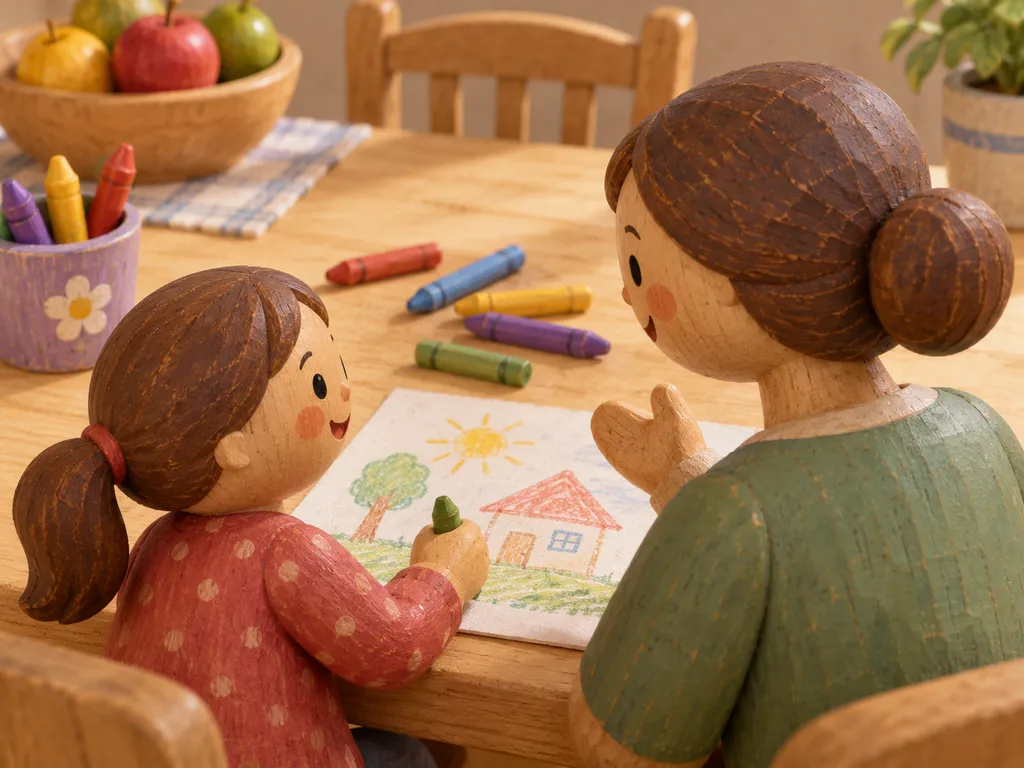
Begin with oral practice. Pause at each missing verb and ask for “message first” or “listener next.” Say and Tell for Kids: A Practical Guide builds accuracy when children identify the pattern.
Choose Say, Tell, Said, or Told
1. Please ___ me where the pencils are.
2. What did you ___ to your cousin?
3. We ___ our tutor that we had finished.
4. The note ___, “Bring a hat.”
5. Can you ___ the time?
6. They ___ that the water was cold.
Answers: 1. tell; 2. say; 3. told; 4. said; 5. tell; 6. said.
Next, repair each sentence and read it aloud. Older learners can offer two corrections when either verb can express the message.
Find and Fix the Mistake
1. She said me to sit down.
2. They told that the match was cancelled.
3. Please tell hello to your neighbours.
4. He said us a funny story.
Possible answers: 1. She told our team to sit down. 2. They said that the match was cancelled. 3. Please say hello to your neighbours. 4. He told us a funny story.
Finish with a two-minute game. Whisper a message; the next person reports: “They said that dinner is ready” and “They told me that dinner is ready.” The added listener explains the verb change.
When a word has several meanings or pronunciations, Cambridge Dictionary is a useful check before turning it into child-friendly examples.
Frequently Asked Questions
These answers cover early speaking and writing questions.
What Is the Easiest Way to Explain Say and Tell to a Child?
Teach say something versus tell someone. Say and Tell for Kids: A Practical Guide asks children to find a listener after the verb. A direct listener usually signals tell. Introduce say hello and tell the truth after this pattern becomes secure.
Why Do We Say “Tell Me” but Not “Say Me”?
Tell takes a person directly: “Tell me the answer.” Say needs to before a listener: “Say the answer to me.” Everyday English usually prefers the first form.
Can Tell Be Used Without a Person After It?
Yes, in established expressions: tell the truth, tell a lie, tell a story, tell a joke, tell the time, and tell the difference. Reported information normally requires a listener: “She told us that the train was late.”
What Are the Past Forms of Say and Tell?
The past forms are said and told. “I say hello every morning” becomes “I said hello yesterday.” “They tell us a story each week” becomes “They told us a story last week.” Neither uses -ed.
How Much Practice Does a Child Need?
Practise briefly in several settings: during meals, books, or lessons. Ask for the verb and a reason: “Why is it told?” Revisit difficult phrases later instead of memorising every use together.
Start your child's English journey today — book a trial lesson with LearnLink.
Stay updated on our latest tips and resources by following us on Instagram LearnLink.